


Many drivers ask the same question every year: “Do I really need winter tires?”
The short answer is yes—winter tires significantly improve safety and can also help extend the life of your summer or all-season tires by reducing year-round wear.
When temperatures drop below 7°C, the rubber in all-season tires begins to harden—much like a hockey puck—resulting in reduced grip and traction.
Winter tires are made with a softer rubber compound and feature deeper tread patterns designed to grip snow and ice. This improves control and shortens braking distances in cold, wintery conditions.
Why Winter Tires are especially important for EV Drivers?
Winter tires play a particularly important role for electric vehicle (EV) drivers. Many EVs are equipped from the factory with low rolling-resistance tires, which are designed to improve efficiency and extend driving range in warmer weather.
While these tires perform well in spring and summer, they typically use firmer rubber compounds that can lose flexibility as temperatures drop. Below 7°C, reduced flexibility leads to diminished traction, longer braking distances, and less control in wet, snowy, or icy conditions.
Additionally, EVs tend to be heavier due to their battery systems, which places greater demand on tire grip—especially during braking. The instant torque delivery common in EVs can also increase the risk of wheel slip on cold or slippery roads.
Switching to dedicated winter tires helps EV drivers maintain proper traction, control, and safety throughout fall and winter driving conditions, without compromising vehicle performance.
When Are Winter Tires Required in BC?
In British Columbia, winter tires or chains are mandatory on most major highways from October 1 to April 30. This includes key routes such as the Sea-to-Sky Highway, Coquihalla Highway, and interior mountain passes.
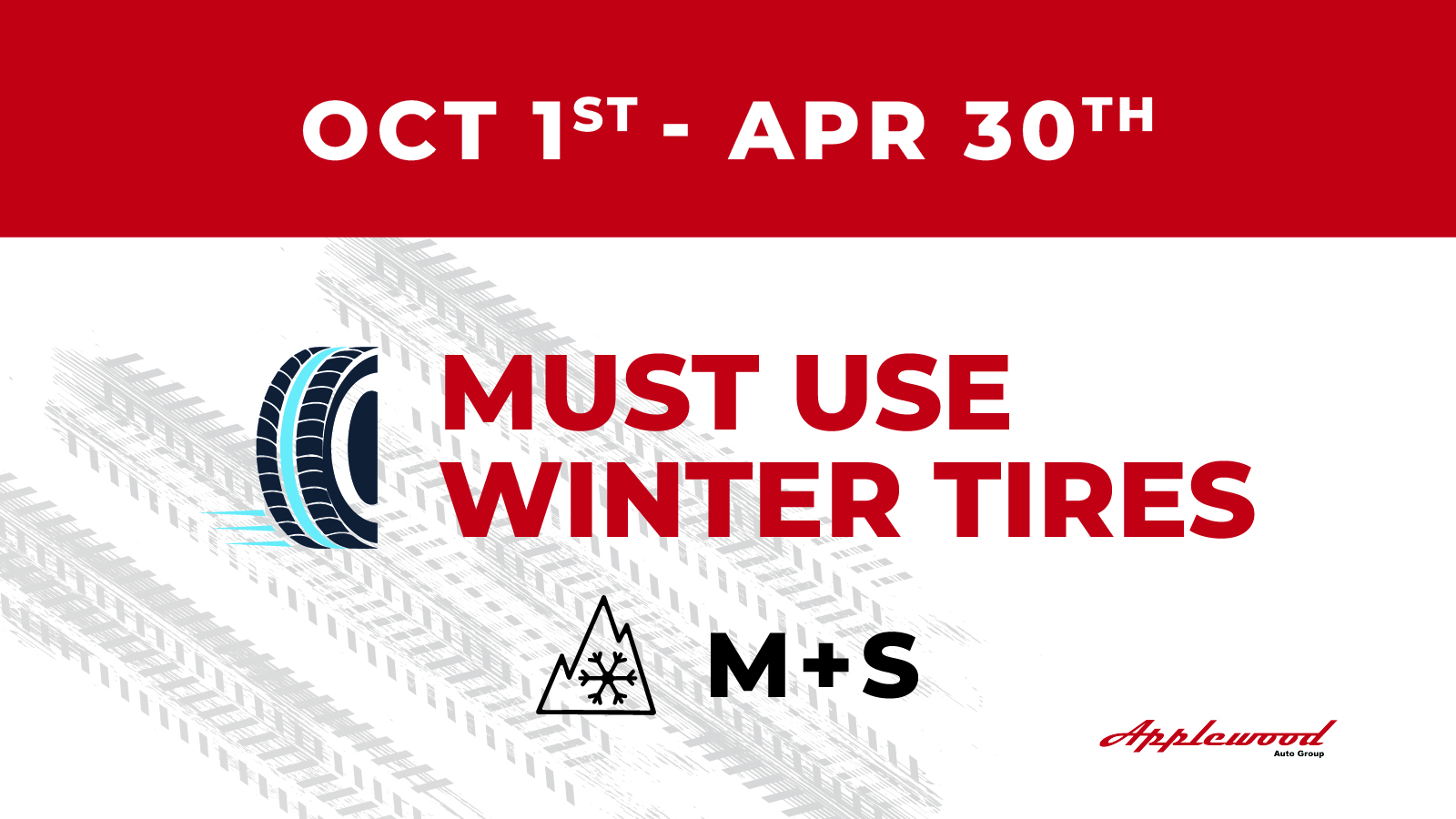
BC Winter Tire Rule Reminder:
Even if you don’t drive on highways, temperatures below 7°C can affect tire performance — that’s when winter tires give you safer traction, better grip, and shorter braking distances.
- Required: October 1 – April 30
- Minimum tread depth: 3.5 mm
- Markings to look for: “M+S” or mountain/snowflake symbol on sidewalls
Tire Type Comparison

Summer Tires
Best for: Warm weather and performance driving
- Designed for maximum grip, braking, and cornering
- Excellent handling on dry and wet roads
- Ideal for sports and high-performance vehicles
- Not suitable for cold temperatures or snow

All-Season Tires
Best for: Everyday driving in spring, summer, and fall
- Reliable performance in dry and wet conditions
- Long-lasting tread life
- Marked with M+S (Mud & Snow)
- Not recommended for winter driving or cold temperatures below 7 °C

All-Weather Tires
Best for: Year-round use in moderate climates
- Hybrid tires that perform well in rain, light snow, and mild winters
- Remains flexible in both warm and cold temperatures
- May wear faster if used year-round in hot conditions
- Not as effective as winter tires in deep snow or icy conditions

Winter Tires
Best for: Cold weather, snow, and icy roads
- Superior traction in snow and freezing temperatures
- Soft rubber stays flexible below 7 °C
- Deep tread improves control and stopping distance
- Essential for safe driving in harsh winter conditions
Winter Driving Tips for BC Drivers
1. Look for the Right Tire Symbol
• The 3-Peak Mountain Snowflake (3PMSF) symbol indicates a tire has been tested for severe snow conditions
• M+S alone does not guarantee winter-level performance
2. Tread Depth Matters
• Winter tires should have at least 4 mm of tread to perform effectively
• Worn winter tires lose much of their snow and ice traction
3. Install Winter Tires Early
• Install winter tires when temperatures consistently approach 7°C, not just when snow or ice appears
4. All-Wheel Drive Does Not Replace Winter Tires
• AWD improves acceleration, but does not improve braking or turning without proper winter tires
5. Use Four Winter Tires, Not Two
• Installing winter tires on all four wheels ensures balanced handling and stability
6. Proper Storage Extends Tire Life
• Store off-season tires in a cool, dry place away from direct sunlight
• Proper storage helps maintain rubber flexibility and tread integrity
Storing your Tires
Proper storage helps maintain the performance and lifespan of your winter tires. Because winter tires use softer rubber compounds, exposure to heat, sunlight, and moisture can cause premature aging and reduced traction.
Storing tires correctly also prevents flat spotting and sidewall damage, ensuring they perform safely when reinstalled. Keeping winter tires clean, dry, and stored in a cool, dark environment protects your investment and helps ensure reliable performance each winter season.
No Space to Store Your Tires?
Relax – we’ve got it handled. Applewood provides year-round tire storage in a climate-controlled environment. The best part? You don’t have to lift a finger, find space for them at home, or squeeze them into your vehicle each season!
Do I Need to Replace my Winter Tires?
You might already have winter tires and here are signs it’s time to swap them out:
• Low tread depth: Less than 3.5 mm for winter tires or 2/32" for summer tires.
• Cracks or bulges: Signs of tire age or internal damage.
• Uneven wear: Often caused by misalignment or low pressure.
• Vibration or pulling: Indicates potential balance or suspension issues.
⚡ Tire Lifespan: Most tires last between 5–6 years, depending on driving habits and storage. ⚡
Need New Winter Tires?
We offer a comprehensive range of winter tires designed to fit all makes and models of vehicles. Whether you drive a compact car, SUV, truck, or high-performance vehicle, our selection ensures you’ll find the right tire to provide maximum traction, control, and safety throughout the winter months.
Applewood All Good Tire Promises
Conquer winter the All Good way.

At Applewood, we believe tire season should be simple and stress-free. Every set of All Good Tires comes with three guarantees to keep both your drive—and your budget—on track.
Free Installation
Enjoy complimentary professional installation by Applewood-certified technicians—done right the first time.
Free Flat Tire Repair
Drive with confidence all season long. If you get a flat, we’ll repair it for free—quickly and hassle-free.
Price Match Guarantee
Found a better price? We’ll match it. Because getting the best deal should never be complicated.

Get your All Good Tires today — and drive with confidence all season long.
With over 10 Applewood locations across BC, we make tire season simple, local, and reliable. Our expert technicians, transparent pricing, and community-first values make every visit — you guessed it — All Good.